Discover how to explore Calpe without a car, from beautiful beaches and scenic walking routes to local buses, TRAM services and day trips along the Costa Blanca. Find out where to stay, how to get around Calpe, which attractions are within walking distance and how to travel from Alicante Airport without hiring a car.
23rd November 2026
Planning a holiday to Calpe but don't want to hire a car? The good news is that Calpe is an excellent destination for visitors who enjoy exploring on foot and using public transport.
This beautiful Costa Blanca town has two main sandy beaches, a traditional Old Town, waterfront promenades, restaurants, shops and the famous Peñón de Ifach, with many attractions located within walking distance of central accommodation.
Calpe also benefits from local bus services, intercity coaches and the TRAM d'Alacant railway, making it possible to explore neighbouring destinations such as Altea, Benidorm and Dénia without driving.
However, choosing the right area to stay is important.
While the central parts of Calpe are relatively easy to explore on foot, some residential urbanisations are situated on steep hillsides or several kilometres from the beaches.
Visitors staying in more remote locations may find themselves relying on taxis or buses, particularly during evenings or outside the summer season.
This guide explains everything you need to know about visiting Calpe without a car, including the best areas to stay, public transport, walking routes, accessible attractions and day trips.
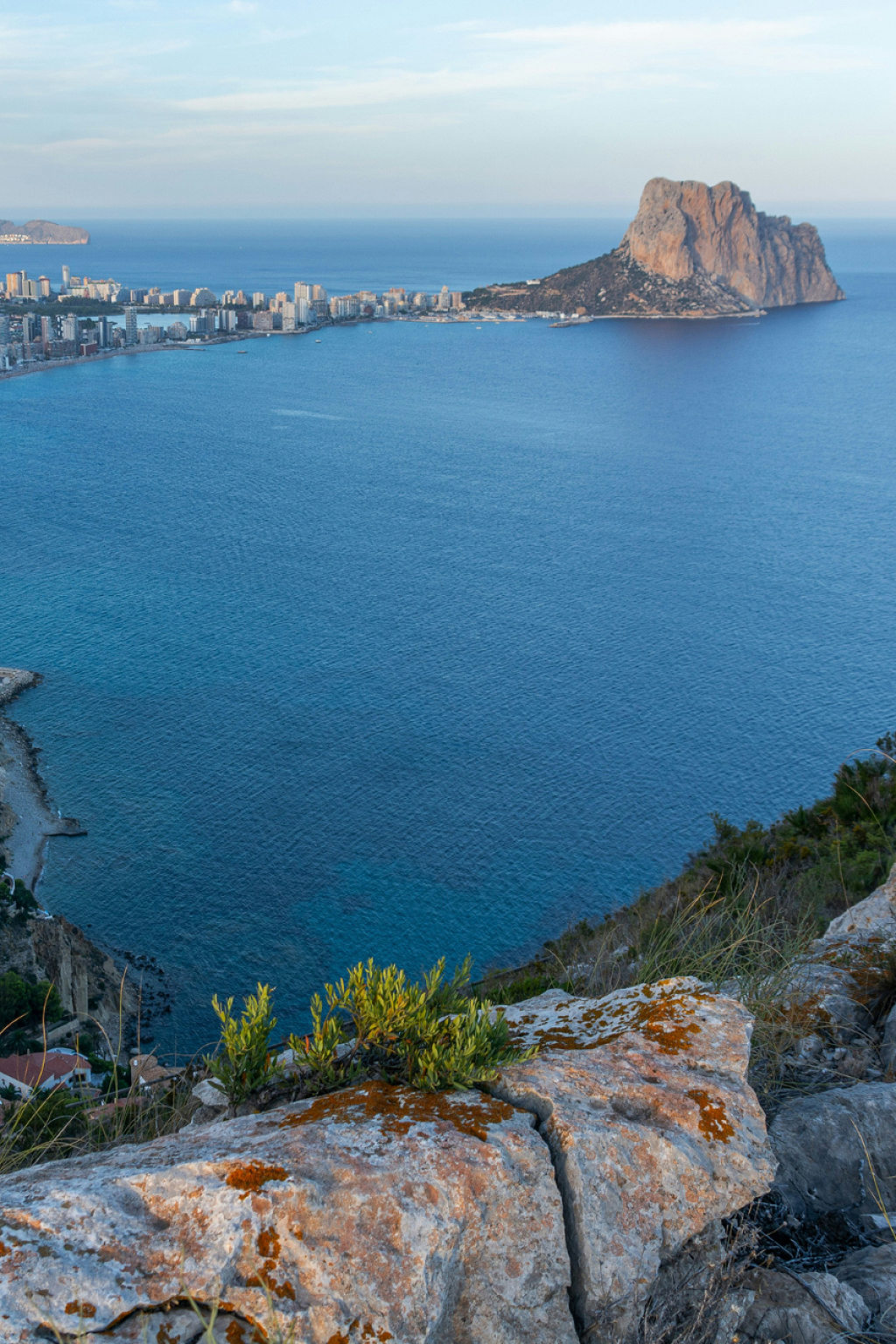
Choosing centrally located accommodation is one of the easiest ways to enjoy Calpe without hiring a vehicle.
The best areas combine walkable beaches with restaurants, supermarkets and access to public transport.
Calpe Town Centre is one of the most practical locations for visitors who want to manage without a car.
The area has supermarkets, shops, traditional cafés, pharmacies, restaurants and local services, making it convenient for both short holidays and longer stays.
Visitors can also explore the historic Old Town and walk towards Arenal-Bol Beach.
The central streets around Avenida Gabriel Miró and Avenida de los Ejércitos Españoles are especially useful for accessing shops and everyday amenities.
Why stay here?
Good access to supermarkets and shops
A wide selection of restaurants and cafés
Convenient for the main bus station
Walking distance to the Old Town
Access to Arenal-Bol Beach
Practical for longer holidays
The main disadvantage is that some accommodation is farther from the beach, so check walking distances carefully before booking.
For many visitors, Arenal-Bol is the best area to stay in Calpe without a car.
The long sandy beach is close to the town centre and has a seafront promenade with restaurants, cafés and beautiful views towards the Peñón de Ifach.
Staying near the western or central sections of Arenal-Bol provides a useful balance between beach access and everyday amenities.
Visitors can spend the morning on the beach, enjoy lunch overlooking the Mediterranean and explore the town without needing to drive.
Why stay here?
Direct access to a sandy beach
Seafront promenade suitable for leisurely walks
Restaurants and cafés nearby
Close to the town centre
Convenient for couples and families
Beautiful views towards Calpe Rock
For visitors who want a traditional beach holiday without a car, Arenal-Bol is particularly appealing.
Read our Guide to Arenal-Bol Beach.
La Fossa, also known as Levante Beach, is another attractive location for visitors without a car.
Situated on the northern side of the Peñón de Ifach, La Fossa offers a long sandy beach, a beachfront promenade and a selection of restaurants, cafés and shops.
The area is popular with families and visitors who prefer to stay close to the beach.
It is possible to reach other parts of Calpe on foot, although walking to the town centre takes longer than from Arenal-Bol.
Local buses can be useful for travelling between La Fossa, the town centre and other parts of Calpe.
Why stay here?
Beachfront apartments and sea views
Restaurants and cafés along the promenade
Convenient for La Fossa Beach
Access to local buses
Close to Las Salinas and the Peñón de Ifach area
Visitors travelling in winter should check which nearby restaurants and shops remain open, as some businesses operate seasonally.
Read our Guide to La Fossa Beach.
Calpe Old Town is an attractive option for visitors who enjoy traditional Spanish streets, historic buildings and local cafés.
The area offers a more authentic town atmosphere than the larger beachfront apartment developments.
However, the Old Town is elevated, with narrow streets, slopes and steps.
Visitors with reduced mobility or families using pushchairs should consider this before booking accommodation.
Best for: Couples, history enthusiasts and visitors seeking a traditional Spanish setting.
Discover more in our Calpe Old Town Walking Guide.
Some residential areas offer beautiful views and peaceful accommodation but are less suitable for visitors relying on walking and public transport.
These include parts of:
Maryvilla
Oltamar
Gran Sol
Cometa
Benicolada's more outlying streets
Other hillside residential urbanisations
Not every property in these areas is difficult to reach, but some are located on steep roads or a considerable distance from shops, restaurants and bus stops.
Before booking, check the walking route rather than relying only on the straight-line distance shown on accommodation websites.
For more information, read our Guide to Calpe's Neighbourhoods.
Calpe has local bus services connecting different parts of the town, including residential areas, beaches and transport hubs.
The urban bus network is operated by Autobuses Ifach, with several routes serving Calpe and neighbouring destinations.
For visitors without a car, buses can be particularly helpful when travelling between the town centre, La Fossa Beach and the TRAM station.
Local bus routes L1 and L2 provide connections through Calpe, including services linking the TRAM station with the town's beach areas.
According to Calpe's official tourism information, visitors arriving at Calp TRAM station can use either the L1 or L2 urban bus towards the beaches.
These services are useful for visitors who prefer not to walk longer distances or who are travelling with luggage.
However, bus routes and timetables can vary depending on the season.
Visitors should check:
The nearest stop to their accommodation
The direction of travel
The latest timetable
Whether services operate on Sundays and public holidays
The last available return bus
Whether the bus is suitable for their accessibility needs
For current route information, consult the Calpe Tourist Information transport guide.
Calpe is also connected to Moraira and Teulada by an interurban bus service.
This provides an alternative to hiring a car for visitors wanting to explore neighbouring Costa Blanca towns.
Moraira is particularly appealing for a day trip, with an attractive marina, sandy beaches, coastal walks and a compact town centre.
However, services are less frequent than transport within Calpe, and timetables may vary between summer and winter.
Always check the return journey before setting off.
One of the biggest advantages of staying in Calpe without a car is access to the TRAM d'Alacant network.
Calp station is located on Line 9, which connects Benidorm with Dénia.
The route passes through several attractive Costa Blanca destinations, including Altea and other coastal communities.
Altea: A popular day-trip destination known for its whitewashed Old Town, blue-domed church and scenic seafront.
Benidorm: Offers beaches, shopping, restaurants and onward transport connections.
Dénia: A historic coastal town with a castle, marina, beaches and a lively town centre.
Alicante: Accessible by travelling on Line 9 to Benidorm and changing onto Line 1 towards Alicante.
Calp TRAM station is not located directly in the town centre or beside the main beaches.
Visitors arriving with luggage should plan their onward journey before travelling.
Local buses L1 and L2 provide connections towards the beach areas, while taxis may be more convenient for some visitors.
Train and tram timetables can change because of seasonal schedules, maintenance or engineering works.
For full details, read our Calpe TRAM Station Guide: Routes, Times and Getting There.
You can also check the latest services using the official TRAM d'Alacant website.
One of the main reasons Calpe is such a good destination for a car-free holiday is its selection of beaches within or close to the main urban area.
Visitors staying centrally can reach several beaches on foot.
Best for: Families, swimming, sunbathing and convenient access from the town centre.
Arenal-Bol is one of the easiest beaches to reach without a car.
The beach stretches for more than one kilometre and is backed by a promenade, with restaurants, cafés and other facilities nearby.
Its central location makes it particularly suitable for visitors staying in the town centre or along the beachfront.
Best for: Beachfront accommodation, sea views and a relaxed beach holiday.
La Fossa is another large sandy beach with a wide promenade.
It is especially convenient for visitors staying in the La Fossa area, although local buses can help those travelling from other parts of Calpe.
Best for: Families, harbour visits and a quieter coastal setting.
Cantal Roig is a small sandy beach located beside Calpe's fishing port.
Visitors can combine a beach visit with exploring the marina, watching the fishing boats and enjoying lunch at one of the nearby seafood restaurants.
Best for: Snorkelling, coastal scenery and walking beneath the Peñón de Ifach.
Located close to Calpe Port, Cala El Racó is a small pebble cove at the foot of the famous limestone rock.
The cove is popular with snorkellers and visitors interested in marine life.
Its rocky surface makes it less suitable for visitors with limited mobility or those looking for a traditional sandy beach.
Visitors can also access the Paseo Ecológico Princesa de Asturias from this area.
Some of Calpe's smaller coves are situated in residential areas or require walking along steeper roads and uneven paths.
Visitors without a car should check access carefully before planning trips to beaches such as Cala Les Bassetes and other more remote coastal locations.
These can be beautiful places to visit, but they are not always as convenient as Arenal-Bol or La Fossa.
Calpe has several attractive walking routes that can be enjoyed without a car, particularly around its beaches, town centre and harbour.
Difficulty: Easy
The promenade beside Arenal-Bol Beach is one of the most convenient walking routes in Calpe.
Visitors can enjoy views across the Mediterranean, stop at cafés and explore the beachfront.
This is a good option for families and those who prefer a relatively level walking route.
Difficulty: Easy to moderate, with slopes and steps.
Calpe Old Town offers a wonderful self-guided walking experience.
Highlights include Torreó de la Peça, historic defensive walls, colourful murals and the famous Spanish flag steps.
The area is more hilly than the beachfront, so allow extra time if you prefer a leisurely pace.
Difficulty: Easy for most walkers.
This scenic coastal promenade begins near Cala El Racó, at the foot of the Peñón de Ifach.
The route is approximately one kilometre long in each direction and offers dramatic views of Calpe Rock and the Mediterranean.
It is an excellent choice for visitors who want to enjoy the scenery without attempting the challenging climb to the summit.
Difficulty: Easy on surrounding public routes.
Las Salinas is a distinctive saltwater lagoon close to the Peñón de Ifach.
The protected wetland attracts flamingos and other bird species, making it a popular destination for nature lovers and photographers.
Visitors can enjoy views from surrounding public areas without needing to drive.
Difficulty: Moderate to challenging, depending on the section.
Calpe's most famous natural landmark offers spectacular views and a memorable hiking experience.
The lower route provides an opportunity to explore the natural park, while the summit route involves steeper, rocky and exposed terrain.
Access is regulated, and advance reservations are required for the protected hiking route.
The upper section is unsuitable for inexperienced walkers or those without appropriate footwear.
Read our Best Walking Routes in Calpe guide for more ideas.
Many of Calpe's main attractions are connected by roads, promenades and pedestrian routes.
The following approximate walking times can help visitors plan their day.
Arenal-Bol Beach: Approximately 10–20 minutes
Calpe Old Town: Approximately 5–15 minutes, depending on starting point
Calpe Port: Approximately 30–45 minutes
La Fossa Beach: Approximately 35–50 minutes
Town Centre: Approximately 10–20 minutes
Calpe Port: Approximately 20–35 minutes
Cantal Roig Beach: Approximately 15–25 minutes
La Fossa Beach: Approximately 30–45 minutes
Peñón de Ifach area: Approximately 15–30 minutes
Calpe Port: Approximately 20–35 minutes
Town Centre: Approximately 35–50 minutes
These times are broad estimates and depend on the exact starting point, chosen route, walking speed and mobility needs.
Calpe's beaches are long, so walking from one end of a beachfront area can take considerably longer than from the other.
Visitors should use a map to confirm the most suitable pedestrian route.
Calpe has made improvements to its accessible tourism facilities, particularly around the two main beaches.
However, accessibility varies between different neighbourhoods and attractions.
Arenal-Bol and La Fossa have designated accessible beach points, with facilities intended to support visitors with reduced mobility.
Depending on the season, facilities may include:
Accessible beach access areas
Adapted toilets and changing facilities
Assisted bathing services
Amphibious wheelchairs
Support from trained staff
These services typically operate during designated beach seasons rather than throughout the year.
Visitors should confirm opening dates, booking requirements and equipment availability before travelling.
The promenades along Arenal-Bol and La Fossa are generally easier to navigate than rocky coves and hillside streets.
However, surfaces, gradients, crossings and access points vary.
The Old Town has slopes, steps and narrow streets, making some routes challenging for wheelchair users and visitors with reduced mobility.
Not all bus stops, vehicles or transport connections will necessarily meet every visitor's accessibility requirements.
Those needing step-free access or wheelchair space should check directly with the relevant operator before travelling.
For further information, visit the official Accessible Calpe guide.
Visitors flying into Alicante-Elche Miguel Hernández Airport can reach Calpe without hiring a car.
ALSA operates bus connections between Alicante Airport and Calpe, including direct services on some schedules.
Depending on your travel date and arrival time, you may also find services requiring a change.
This is often one of the most convenient public transport options for visitors travelling with luggage.
Check departure times, ticket prices and the exact arrival stop before booking.
Visit the ALSA website for current routes and tickets.
It is possible to travel towards Calpe using the TRAM network, although this requires additional connections.
From Alicante Airport, visitors first need to reach Alicante city by bus or another transport service.
From Alicante, take TRAM Line 1 towards Benidorm, then change to Line 9 towards Calp.
This can be an enjoyable coastal journey, but it may be less convenient for travellers with heavy luggage or late-night arrivals.
A pre-booked airport transfer or taxi is a convenient alternative for families, groups or visitors arriving outside public transport operating hours.
Although more expensive than public transport, a private transfer provides a direct journey to your accommodation.
This can be particularly helpful if you are staying in a residential area away from the town centre.
Calpe can also be an enjoyable destination without a car during the quieter winter months.
The town remains active throughout the year, with supermarkets, cafés, restaurants and local services operating beyond the summer season.
However, winter visitors should be more careful when choosing accommodation.
Some beachfront establishments close temporarily or reduce opening hours, and bus services may operate different seasonal schedules.
For longer winter stays, the town centre and Arenal-Bol are particularly convenient because shops, restaurants and other amenities are within walking distance.
Read our Calpe in Winter: Weather, Things to Do and Where to Stay guide for seasonal advice.
Choose central accommodation: Arenal-Bol and the town centre are generally the most convenient options.
Check walking routes before booking: Some properties are advertised as close to the beach but require steep uphill walks.
Plan airport transfers: Check bus arrival times against your flight schedule.
Use the TRAM for day trips: Altea, Benidorm and Dénia are accessible by rail.
Check the last return service: Particularly when travelling in the evening.
Allow extra time: Local buses and intercity transport may be less frequent than visitors expect.
Consider taxis for occasional journeys: A few taxi trips may be more economical than hiring a car for an entire holiday.
Travel earlier in summer: Walking can become uncomfortable during the hottest hours.
Check accessibility: Not all streets, beaches and transport connections offer step-free access.
Use official transport websites: Timetables and fares can change throughout the year.
Discover more useful guides to planning your Calpe holiday:
CalpeOnline24 Sponsors

Featured Businesses
Calpe or Benidorm: Which Costa Blanca Destination Is Right for You?
Choosing between Calpe and Benidorm depends on the...
Hotel Sol y Mar

Opened in June 2007, the Gran Hotel Sol y Mar in...
Calpe Without a Car: Beaches, Buses, Walking Routes & Day Trips
Discover how to explore Calpe without a car, from...
Ciclos Tony & SolyBike - Bike sales / rentals & Cycling Holidays Costa Blanca
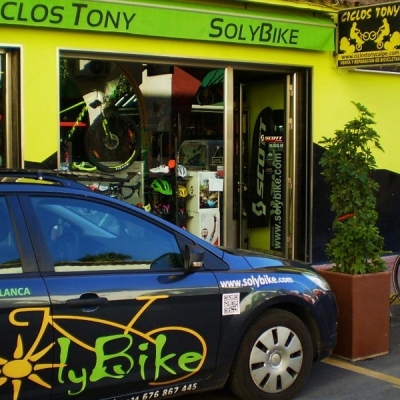
Ciclos Tony & SolyBike combine the best of cycling...
Book Now: Alicante Airport Transfers with BENICONNECT
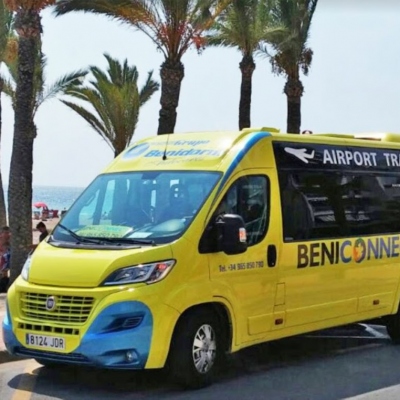
Reliable airport transfers are available with...
Rent A Car Calpe - Costa Blanca Car Rentals & Hire

Find Rent A Car businesses offering services in...
Transfers from Alicante Airport

Find information about transfers from Alicante...
Calpe in Winter: Weather, Things to Do & Where to Stay

Discover what Calpe is like in winter, from mild...
Alquileres Villamar - Holiday Rentals Moraira - Calpe - Benissa - Benitachell

Alquileres Villamar - Holiday Rentals & Homes is a...
Beniconnnect - Private Taxi Transfers from Alicante Airport

Beniconnect transfers offers reliable private...


 Spanish
 Chinese (simplified)
 Dutch
 French
 German
 Italian
 Norwegian
 Polish
 Romanian
 Russian